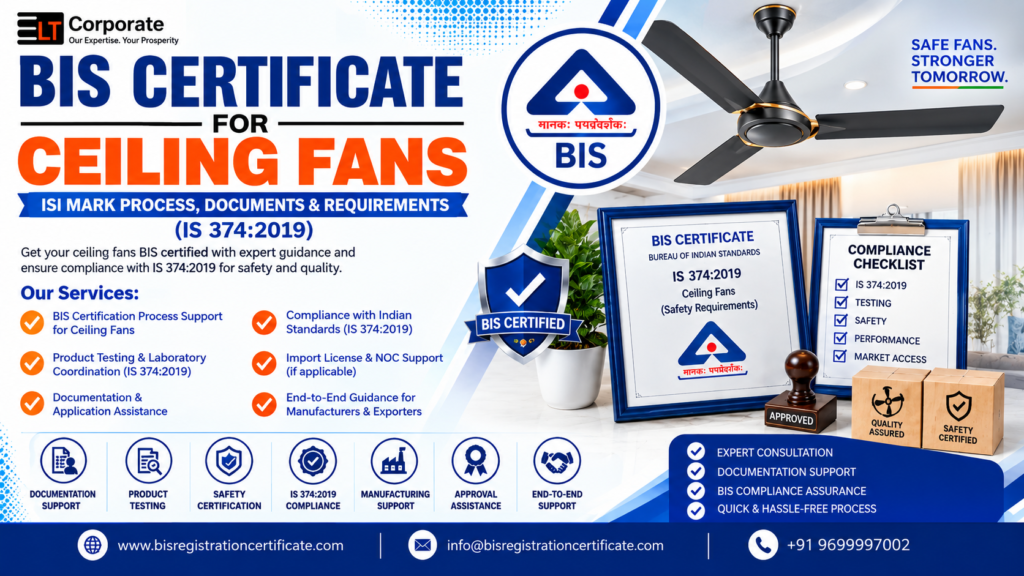
Ceiling roses are an important part of any electrical device in homes and businesses. They are decorative materials used to attach gentle ceiling fixtures to electrical wires, to present capacity and aesthetic appeal but do you realize that these iconic and easy add-ons have to meet stringent maintenance and exorbitant quality standards before reaching the market? This is where BIS certification for ceiling roses comes into play.
What is BIS Certification?
The Bureau of Indian Standards (BIS) is India’s national popular framework, responsible for formulating and implementing requirements across numerous commodities BIS certification guarantees that product adheres to set protection, quality and overall performance standards, protecting customers and increasing trust within the marketplace.
BIS certification for electrical add-ons such as ceiling roses indicates that the product has been tested:
- Electrical Safety: Prevention of hazards such as fast circuits, electrically conducted shocks, and fires.
- Material pleasant: ensures durability and resistance to tearing and installation.
- Performance standards: Compliance with IS standards for electrical fittings.
Why Ceiling Roses Need BIS Certification
The ceiling roses are connected to the manufacturing’s electrical system without delay. Non-conforming or substandard ceiling roses can be the result of:
- Electrical injuries, such as shock and fireplace hazards.
- premature wear and product failure.
- Legal punishment of producers and sellers as per Indian rules.
By receiving BIS certification, growers demonstrate that they have rooftop roses:
- Meet Indian safety standards (IS 1293 and related electrical standards).
- are safe for customers to use.
- Strengthen logo credibility and market reputation.
BIS Certification Process for Ceiling Roses
The process of obtaining BIS certification consists of two steps:
- Application Presentation
Manufacturers or importers need to set up a utility for BIS, which offers:
- Product information (fabric, layout, dimensions)
- Building website information
- Test reports from NABL-accredited laboratories
- Examination of samples
BIS should use ceiling rose samples in authorized laboratories to ensure certain compliance with relevant IS standards. Testing usually includes the following:
- electrical insulation assessment
- Load-carrying test
- material durability and flammability assessment
- factory inspection
The BIS audits the manufacturing facility to verify that the manufacturing techniques are consistent with the set excellence requirements. This includes:
- procurement and storage of raw materials
- Production method control
- Quality management mechanism
- Grant of license
After successful testing and inspection, BIS poses a licensing problem, allowing the manufacturer to apply the ISI mark on the ceiling rose, indicating BIS certification
- Surveillance and Renewal
BIS periodically conducts surprise inspections and model testing to ensure continued compliance. Licenses generally require renewal after a certain period.
Benefits of BIS Certification for Ceiling Roses
Obtaining BIS certification offers several benefits:
- Consumer confidence: The ISI mark presumably assures the safety and excellence of the product to the buyers.
- Market access Mandatory compliance for certain electrical products in India.
- Legal compliance: Electronics and electrical goods (compulsory registration) reduces the danger of consequences below the order.
- Competitive edge: Certified goods routinely enjoy better marketability and symbol popularity.
Mandatory vs. Voluntary BIS Certification
For ceiling roses, BIS certification can be mandatory if specified under the Compulsory Registration Scheme (CRS) for electrical goods. If not mandatory, certification remains voluntary but still recommended to assure quality and gain consumer trust.
Key IS Standards for Ceiling Roses
Manufacturers have to ensure compliance with applicable Indian Standards (IS), including the following:
- IS 1293: General requirement for lampholders and ceiling rose fittings.
- IS 3854: Safety requirements for wiring add-ons.
- IS 814: Material and insulation requirements.
Compliance with those standards ensures protection, sustainability and regulatory compliance.
How ELT Corporate Can Assist
Navigating BIS certification can be complex, especially with multiple requirements and compliance requirements. ELT provides stop-to-seize assistance to corporate producers and importers, including:
- Creation of BIS Certification Packages
- Coordination of pattern checking with NABL-accredited laboratories
- Ensure manufacturing unit inspection readiness
- Maintaining compliance for license renewal
Our experts help you achieve nuisance-loose certification, ensuring that your ceiling roses meet all safety and micro-criteria.
Conclusion
BIS certification for rooftop roses is more than just a regulatory requirement—it’s exceptional, a commitment to safety and patron trust. Whether you are a producer or an importer, getting BIS certification guarantees that your products are safe, long lasting and dependable in the Indian market.
Investing in BIS certification is no longer the most effective while still protecting stop-clients and strengthening your brand reputation and marketplace presence. Make sure your ceiling roses deliver the ISI mark, and lighten homes effectively and reliably!