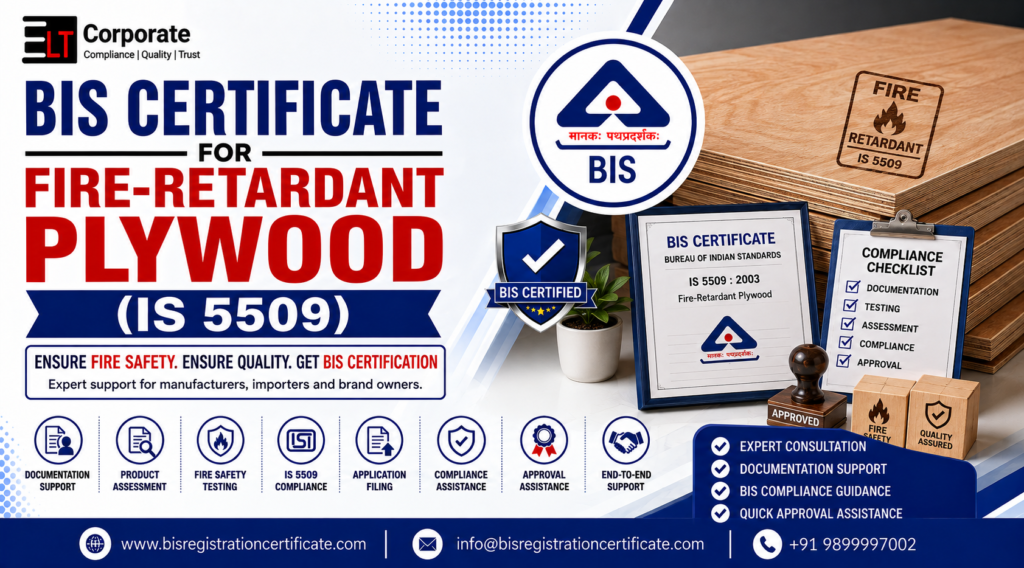
Buildings that are fireproof have been a major concern for builders, architects, and the regulatory authorities in India, particularly in structures with high occupancy like hotels, hospitals, cinema halls, and multi-story housing complexes. Fire-retardant plywood plays an important part in preventing spreading fire as well as providing occupants with time to leave safely. To ensure that fire-retardant wood that is sold in India is actually performing as advertised in the market, it is required to be certified by the Bureau of Indian Standards.
The Bureau of Indian Standards has been notified of this product to conform with IS 5509, which makes BIS certification mandatory for all producers and importers. This blog will explain everything you must know about getting a BIS certification for fire-resistant plywood and includes testing standards, specifications, and the entire registration procedure.
What Is IS 5509 for Fire Retardant Plywood?
IS 5509 refers to an Indian Standard specification governing the production quality, fire, and performance of fire-resistant plywood employed in interior and construction applications. The standard specifies the chemical treatment methods as well as the requirements for adhesive bonding and the fire resistance testing requirements that plywood must satisfy for it to qualify as truly fire-resistant.
In contrast to ordinary plywood, fire-retardant wood is treated with a specialized chemical impregnation coating that slows the rate of combustion and reduces spread of flames and minimizes smoke production in the event of exposure to fire. BIS certification in accordance with this standard assures that only plywood that meets the strict safety standards can be sold into the Indian market.
Why BIS Certification Is Mandatory for Fire-Resistant Plywood
The fire-retardant wood is part of BIS’s certification system because false or exaggerated claims about fire safety could put people’s lives and property at risk. Contractors for government, builders, and buyers from institutions increasingly require certified fire-retardant wood from BIS to ensure compliance with the building safety regulations along with Fire NOC (No Objection Certificate) approvals.
Producing or selling fire-retardant lumber without having a valid BIS license is in violation of Indian laws and could cause fines, product seizures, and the rejection of your product when you bid on the case of institutional and government tenders in which certifications are a prerequisite.
Key Testing Parameters Under IS 5509
Fire-retardant plywood needs to undergo a series of fire-performance and technical tests prior to BIS certification being granted. The table below provides the most important testing parameters to be assessed in accordance with IS 5509:
| Test Parameter | Purpose | Requirement |
| Flame Spread Test | Determines the speed at which the spread of fire across the plywood surface | Should remain within the specified limits of low flame spread. |
| Fire Penetration Test | Determines the resistance to fire that passes through the panel. | Minimum resistance duration per IS 5509. |
| Surface Spread of Flame | Examine the flow of flames across the surface. | The fire class must be Class 1 or a defined fire class. |
| Smoke Density Test | Evaluates smoke generation during combustion | Smoke output is allowed within the permissible limits. |
| Bonding Strength (Glue Shear Test) | Verifies the bonding quality of adhesive after chemical treatment | Conforms to minimum strength requirements. |
| Moisture Resistance | Examine the stability of plywood under humid conditions. | There is no delamination or swelling that goes beyond boundaries. |
Documents Required for BIS Registration of Fire Retardant Plywood
In order to apply for a BIS certification for fire-resistant plywood, the manufacturer must submit the following documents:
- License for manufacturing at the factory and proof of registration for business (GST certificate or incorporation documents).
- The manufacturing process flow chart is detailed and includes chemical treatment methods.
- The raw material specification, which includes the kind of timber veneer and adhesive as well as the fire-retardant chemicals that are employed.
- Reports of tests from a recognized BIS laboratory verifying conformity with IS 5509.
- Quality control and testing infrastructure information.
- Proof of ownership of a brand or trademark in the event that it is applicable.
- Signatory authorization and factory address document.
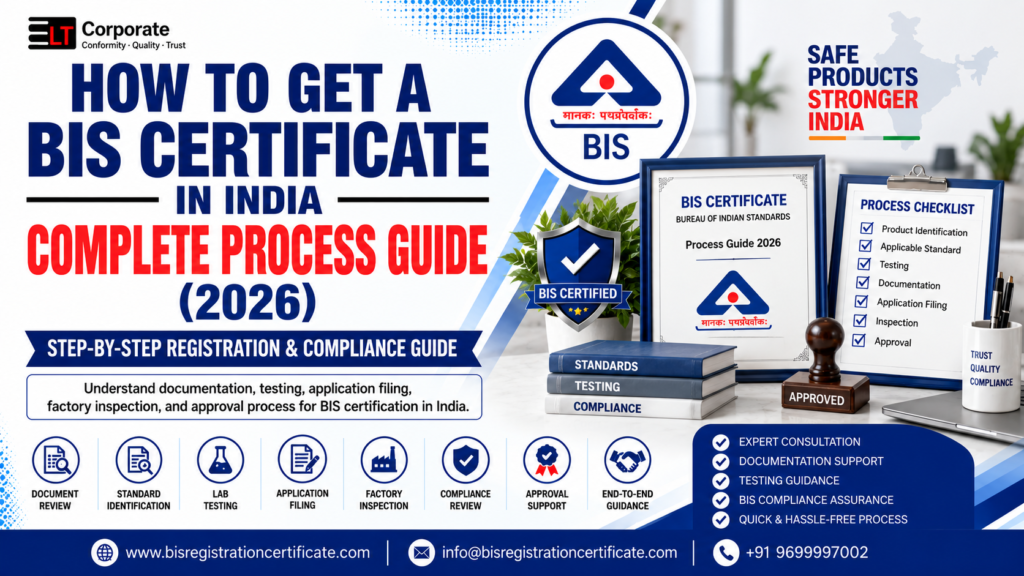
Step-by-Step BIS Certification Process
- Initial Assessment: We evaluate your manufacturing process and chemical treatment process and verify the applicability of your setup to IS 5509.
- Documentation Preparation: All legal and technical documents are prepared and formatted in accordance with BIS filing specifications.
- Tests on Samples: Plywood samples go to a laboratory accredited by BIS for smoke spread, flame density, and bonding strength tests.
- Application Filing: The complete application must be made available via the BIS Manak Online / eBIS portal along with the supporting documents.
- Factory Inspection: BIS officials perform an audit on site to confirm the manufacturing process and raw material quality and testing capabilities in-house.
- Certificate Issuance: Once the certificate is accepted after approval, the BIS Registration Certificate is granted, which permits the legal production and sale of fire-retardant-certified plywood throughout India.
Who Needs BIS Certification for Fire-Resistant Plywood?
BIS certification in accordance with IS 5509 is applicable to a broad range of businesses within the construction and plywood supply chain, such as
- Plywood producers producing fire-retardant panels to be used in residential and commercial applications.
- Importers who import fire-resistant plywood to India from manufacturers in the world.
- Builders and contractors who work in the interior supply fire-rated wood for institutional and government projects.
- Dealers and distributors selling fire-retardant wood under their personal brand names.
- Furniture manufacturers that use fire-retardant plywood in commercial buildings that are sensitive to fire.
Applications of Fire-Resistant Plywood
Fire-retardant plywood is extensively used in areas where fire safety is crucial, such as hotels, hospital rooms and corridors, auditoriums, cinema halls, railway coaches, and the interiors of airports, high-rise commercial and residential buildings. Numerous state fire departments as well as municipal authorities require the proof of BIS-certified fire retardant products prior to granting approvals for fire safety, making certification a necessity for business instead of an optional upgrade for companies that are targeting institutions or government contracts.
Common Challenges in Fire Retardant Plywood Certification
Manufacturers are often delayed because of inconsistencies in chemical treatment methods that fail to meet the flame spread and smoke-density standards during tests. The incorrect documentation of the chemical formulation that is fire-retardant and insufficient bonding strength following treatment, and insufficient preparation for factory inspections, are typical causes for rejection of an application or the need to resubmit. A partnership with a knowledgeable BIS certification expert can help detect these issues early, which will ensure a smoother and quicker route to certification.
Why Choose Us for BIS Certification of Fire Retardant Plywood?
We offer full, complete, end-to-end assistance in the process of BIS registration of fire-resistant plywood, right from the beginning of documentation until the final certificate is issued. Our team collaborates directly with recognized BIS labs for testing samples as well as manufacturing inspection preparation and ensures that your application is completed in a timely manner to ensure that there are no delays.
With years of experience in multiple certifications for construction materials. We assist manufacturers and importers in obtaining quicker approvals while staying in line with BIS regulations.
Conclusion
Fire-retardant plywood is essential for building safety, and BIS certification under IS 5509 ensures only genuinely fire-resistant, tested products reach the market. This certification builds trust with builders, government agencies, and institutional buyers.
With correct documentation and the right testing partner, certification becomes hassle-free. Contact our team today to start your BIS registration for fire-retardant plywood without delays.
Frequently Asked Questions
Q1. Which Indian standard is applicable to fire-resistant wood?
IS 5509 defines the relevant standard that defines the fire-performance requirements and test criteria for fire-retardant plywood that is part of the BIS certification scheme. BIS Certification Scheme.
Q2. Do you think BIS certification is required for imports of fire-resistant plywood?
Yes, fire-retardant plywood imported from India must meet BIS registration specifications before it is legally sold in India. Indian market.
Q3. What is the time frame for BIS registration for fire-resistant plywood?
The procedure typically takes approximately 45-90 days, dependent on the timeframes for laboratory testing as well as the completeness of documentation and manufacturing inspection schedules.
Q4. What happens if fire-resistant lumber is sold with no BIS certification?
The sale of non-certified fire-retardant lumber could cause fines, seizures of products, and legal action in accordance with the BIS Act, along with the rejection of government and institution tenders.
Q5. Does fire-retardant plywood need an inspection at the factory to obtain BIS approval?
Absolutely, BIS inspects factories to check the chemical treatment procedure, manufacturing quality, and testing facilities in-house before giving the certification.
Q6. Can fire-resistant plywood be used in conjunction alongside regular wood?
The fire-resistant plywood is treated with a specific chemical treatment for protection against fire. It cannot be substituted for regular plywood for fire-sensitive projects that require the compliance of.