One of the first questions every manufacturer or importer asks before applying for BIS certification is simple: how much will it actually cost? The honest answer is that there is no single fixed number. BIS certification cost depends on your product category, the applicable IS code, your factory’s location, the testing complexity involved, and whether you are applying as a domestic manufacturer under the ISI Mark scheme or as a foreign exporter under the Foreign Manufacturers Certification Scheme (FMCS).
Many first-time applicants budget only for the “application fee” and are caught off guard by testing, inspection, and consultant charges that come later in the process. This guide breaks down every cost component involved in BIS certification, so you know exactly where your money goes and can plan your budget realistically before you begin.
What Makes Up the Total BIS Certification Cost?
BIS certification cost is made up of several separate charges that accumulate across the certification journey, not a single payment made at the start. Here is the full breakdown of what most applicants can expect to pay:
| Cost Component | Approximate Range |
|---|---|
| BIS Application Fee | ₹1,000 – ₹5,000 |
| Laboratory Testing Fee | ₹15,000 – ₹50,000+ |
| Factory Inspection Charges | ₹10,000 – ₹30,000 |
| Consultant / Professional Fee | ₹20,000 – ₹80,000 |
| Annual Marking Fee (ISI Mark Usage) | ₹5,000 – ₹15,000 |
| Licence Renewal Cost (every 1–2 years) | ₹10,000 – ₹25,000 |
Note: These are approximate industry ranges, not official BIS figures. Actual cost depends heavily on product category and testing complexity, so it is best to get a specific quote for your product before finalising your budget.
ISI Mark vs FMCS: Cost Difference
If you are a domestic manufacturer applying for ISI Mark certification, your overall cost is generally lower because factory inspections happen locally, testing samples travel shorter distances, and there is no need for cross-border coordination. Most domestic applicants complete the process within a predictable budget once documentation is in order.
If you are a foreign manufacturer exporting steel, electronics, or any other regulated product to India, you will instead need FMCS certification. FMCS applications typically cost 1.5 to 2 times more than domestic ISI applications. This is because FMCS involves international factory audits, either physical or remote, along with additional documentation routed through an Authorized Indian Representative (AIR), international courier costs for samples, and longer coordination timelines between the manufacturer, BIS, and the testing laboratory. Businesses exporting to India should budget for these additional logistics costs well in advance rather than treating FMCS as a simple extension of ISI Mark pricing.
What Affects Your Final Cost?
No two applicants pay exactly the same amount for BIS certification. Several factors influence where your final cost lands within the ranges above:
- Product category — electronics, steel, chemicals, and consumer goods each have different testing complexity, and therefore different lab fee structures.
- Number of manufacturing units — since ISI Mark licences are factory-specific, each additional production unit requires its own application, inspection, and fee.
- Testing lab location — if no BIS-accredited lab exists near your factory, sample transport and logistics add to your overall cost.
- First-time application vs renewal — renewals are typically cheaper and faster than fresh applications, since much of the documentation and factory profile is already on record.
- Domestic vs foreign manufacturer status — as covered above, FMCS consistently costs more than ISI Mark certification due to international audit requirements.
Hidden Costs Most Applicants Forget
Beyond the fees listed in the table, many first-time applicants underestimate a few less obvious costs that can meaningfully affect their total budget:
- Factory readiness costs — calibrating testing equipment, upgrading in-house quality control systems, and training staff before the BIS inspection, all of which are necessary but often overlooked in initial budgeting.
- Retesting fees — if your first product sample fails laboratory testing, you will need to pay again for a second round of sample testing, which can add several weeks and additional cost.
- Cost of delays — incomplete documentation or an unprepared factory at the time of inspection doesn’t just cost money directly, it also costs time. For importers in particular, a delayed certification can mean lost business opportunities or goods held at customs, which carries its own financial impact well beyond the certification fee itself.
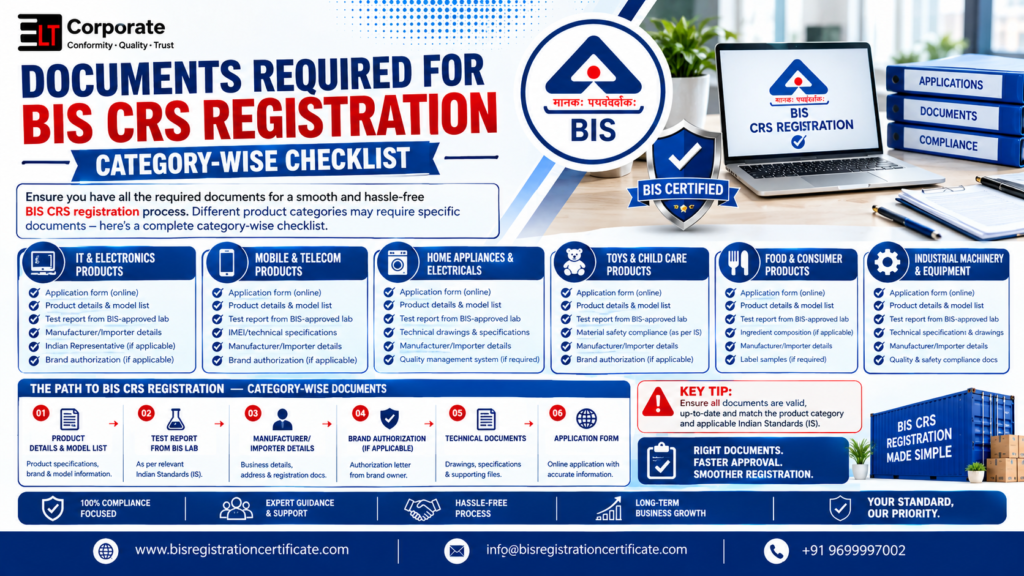
For a complete list of what is needed before you apply, refer to our complete documents checklist for BIS registration, so your application is complete the first time.
Get Your Exact BIS Certification Quote
Every product is different. Talk to our experts and get a cost estimate specific to your product category — free of charge.
Get Free Cost Estimate →How to Reduce Your BIS Certification Cost
- Prepare documentation fully before applying. Incomplete applications are one of the most common reasons for delay, and every resubmission cycle adds time and, in many cases, additional charges.
- Calibrate factory equipment before inspection. A failed inspection due to preventable issues means paying for a second visit, which is entirely avoidable with proper preparation.
- Work with an experienced consultant. Selecting the correct IS code and preparing accurate paperwork the first time helps you avoid the single most expensive mistake in this process: rejection followed by a full reapplication.
- Plan renewals early. A lapsed licence often means restarting portions of the process, which ends up costing considerably more than a timely, planned renewal.
Important Points to Keep in Mind
- Fees are largely non-refundable. Once you submit your BIS application and pay the associated charges, most costs, including testing and inspection fees, are not refunded even if your application is rejected or your factory fails inspection. This is exactly why getting documentation and factory readiness right the first time matters more than trying to save on upfront consultant fees.
- GST applies on top of most service charges. Testing lab fees, consultant charges, and inspection costs typically attract GST separately from the base BIS application fee. When budgeting, factor in this additional cost so there are no surprises at the invoicing stage.
Conclusion
BIS certification cost in India is not a single number, but a combination of application fees, testing charges, inspection costs, and ongoing renewal expenses. While the ranges shared in this guide give you a realistic starting point, your actual cost will depend on your product category, factory setup, and whether you are applying through ISI Mark or FMCS.
The biggest cost mistake manufacturers and importers make is rarely the certification fee itself. It is the delays and rejections caused by incomplete documentation or an incorrect IS code, which force a second, more expensive round of testing and inspection. Getting it right the first time is almost always cheaper than fixing it later.
If you would like an exact cost estimate for your specific product, our team can walk you through the numbers before you spend a single rupee on the application.
Frequently Asked Questions
Q1. Is BIS certification cost the same for all products?
No. Cost varies by product category, the applicable IS code, and testing complexity. Electronics and steel products, for example, typically follow different fee structures based on the standards they must meet.
Q2. Is FMCS more expensive than ISI Mark certification?
Yes. FMCS is generally more expensive than ISI Mark due to international audit logistics, sample shipping costs, and coordination with a foreign factory through an Authorized Indian Representative.
Q3. Do I need to pay every year for BIS certification?
You pay an annual marking fee for continued use of the ISI mark, along with a renewal fee once your licence period ends, typically every one to two years depending on the scheme.
Q4. Can I get an exact cost estimate before applying?
Yes. Since cost depends on your specific product, IS code, and factory setup, it is best to get a tailored quote rather than relying on general ranges published online.
Q5. What happens if my factory fails inspection?
You will typically receive a list of corrective actions to address before a re-inspection is scheduled, which usually adds both time and additional cost to the overall process.
Ready to Start Your BIS Certification?
Talk to our experts today — documentation, audits, and approvals, fully handled.