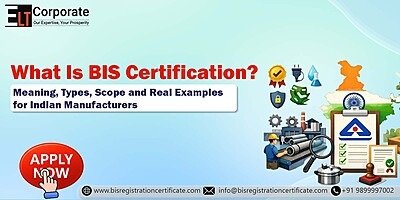
Every year, thousands of manufacturers in India face market entry delays and potential legal issues due to confusion surrounding product certification. From bustling industrial hubs in Delhi and Mumbai to the tech-savvy zones of Bengaluru and the manufacturing centers of Pune and Chennai, businesses are constantly seeking clarity on regulatory compliance. Among the most crucial of these is BIS certification.
So, what exactly is BIS certification, and why is it so important for Indian manufacturers and importers? Let’s dive into understanding this essential quality mark.
BIS Certification Meaning – Breaking Down the Basics
BIS certification stands for Bureau of Indian Standards certification. It is a system designed to provide third-party assurance of quality, safety, and reliability of products to the consumer.
Essentially, when a product receives BIS certification, it means it has met the specific quality and safety standards set by the Bureau of Indian Standards.
The Bureau of Indian Standards (BIS) is India’s National Standard Body, established under the BIS Act 2016. Its primary role is to develop and implement standards for various products, systems, and services. It also provides product certification, management system certification, and laboratory recognition schemes. This framework ensures that products available in the Indian market adhere to a certain level of quality, protecting consumers and promoting fair trade practices.
Read More: Introduction To Bureau Of Indian Standards
Why Does BIS Certification Matters for Your Business?
For manufacturers, BIS certification is more than just a label; it’s a gateway to the Indian market. It signifies adherence to Indian Standards, building consumer trust and brand reputation. Without it, many products cannot be legally sold or imported into India, leading to significant penalties. This certification plays a critical role in ensuring product quality, consumer safety, and market access for Indian as well as foreign manufacturers.
Benefits and Importance of BIS Certification
Obtaining BIS certification offers a multitude of advantages for manufacturers and consumers alike. These benefits extend beyond mere compliance, impacting market presence, brand reputation, and operational efficiency.
- Enhanced Consumer Trust: The ISI mark or BIS logo assures consumers of a product’s quality and safety, leading to increased confidence and preference.
- Market Access: For a growing list of products, BIS certification is mandatory for sale in the Indian market, making it essential for legal operation and expansion.
- Competitive Advantage: Certified products often stand out from uncertified ones, giving manufacturers an edge in a competitive market.
- Improved Product Quality: The rigorous testing and auditing processes help manufacturers identify and rectify quality issues, leading to better products.
- Reduced Risk of Penalties: Compliance avoids fines, product recalls, and legal action that can arise from selling non-compliant goods.
- Brand Reputation: Displaying a BIS mark demonstrates a manufacturer’s commitment to quality and safety, strengthening their brand image.
Required Documents and Prerequisites
The specific documents needed for BIS certification can vary slightly depending on the product category and the chosen certification scheme. However, a general list of essential documents includes:
- Company Registration Documents: Proof of manufacturing unit registration, such as a factory license, GST registration, or Memorandum of Association.
- Manufacturing Process Flow Chart: A detailed outline of the production process.
- Test Reports: Comprehensive test reports from a BIS-recognized laboratory, showing compliance with the relevant Indian Standard.
- Raw Material Details: List of raw materials, their suppliers, and their test certificates.
- In-house Testing Facility Details: If applicable, details of the company’s testing equipment and calibration certificates.
- Quality Control Personnel Details: Information about the quality control staff and their qualifications.
- Trademark Registration: Copy of the trademark registration certificate.
- Product Drawings/Specifications: Detailed technical drawings and specifications of the product.
- Address Proof of Manufacturing Unit: Utility bills or rental agreements.
- Authorized Signatory Documents: ID and address proof of the authorized person.
For foreign manufacturers, an Authorized Indian Representative (AIR) is also a prerequisite, along with relevant import-export codes and local business registration if applicable.
Read More: Documents Required For BIS Registration
Validity of BIS Certification
Generally, a BIS license is granted for a period of two years. However, the exact validity can range from one to three years, depending on the specific product and certification scheme. It is crucial for manufacturers to track their license expiry dates. Renewal applications must be submitted before the current validity period ends to ensure continuous compliance and avoid disruptions to market sales.
The renewal process usually involves a review of continued adherence to standards, factory audits, and submission of updated test reports. Regular internal quality checks are essential throughout the validity period.
The Complete BIS Certification Process
Navigating the BIS certification process can seem daunting, but breaking it down into clear steps makes it manageable. Here’s a simple, chronological guide:
- Identify the Relevant Indian Standard: First, determine which Indian Standard (IS) applies to your product. This specifies the quality, safety, and testing requirements.
- Prepare Product Samples: Prepare samples of your product for testing. Ensure they represent your standard production.
- Get Products Tested: Send your samples to a BIS-recognized or empanelled laboratory for testing against the identified Indian Standard. The test report is typically valid for 90 days.
- Online Application Submission: Register on the BIS online portal (manakonline.in or crsbis.in for CRS). Fill out the application form with all necessary details and upload the required documents, including the test report.
- Application Scrutiny and Fee Payment: BIS officials will review your application. Once approved, you will be prompted to pay the application fees.
- Factory Inspection (for ISI Mark/FMCS): For ISI Mark and Foreign Manufacturers Certification Scheme (FMCS), BIS will conduct a physical inspection of your manufacturing facility. This verifies that your production process, quality control systems, and testing infrastructure comply with BIS norms. This step is usually not required for CRS.
- Grant of License: If your application, test reports, and factory inspection (if applicable) meet all requirements, BIS will grant you the license. You can then use the ISI mark or BIS registration logo on your product.
- Surveillance and Renewal: Maintain quality records, conduct regular in-house testing, and be prepared for periodic surveillance visits from BIS. Renew your license before its expiry, typically every two years.
Read More: Process for getting BIS for Certification
Common Mistakes to Avoid
Many manufacturers encounter avoidable pitfalls during the certification journey. Being aware of these can save time and resources.
- Incomplete Documentation: Submitting applications with missing or incorrect documents is a common cause of delays. Double-check every requirement.
- Incorrect Standard Identification: Applying under the wrong Indian Standard for your product can lead to rejection and wasted effort. Seek expert guidance if unsure.
- Using Non-Recognized Labs: Test reports from laboratories not recognized by BIS are invalid. Always verify the lab’s accreditation.
- Lack of In-House Testing Facility: For ISI Mark, not having adequate in-house testing equipment or calibration certificates can be a stumbling block during factory inspections.
- Delay in Responding to Queries: BIS may raise queries during scrutiny. Prompt and accurate responses are crucial to keep the process moving.
- Neglecting Quality Control: Post-certification, failure to maintain consistent product quality and records can lead to suspension or cancellation of the license.
What Happens If You Ignore It?
Ignoring BIS certification requirements for mandatory products carries significant risks and penalties, impacting your business severely.
Legal Penalties: Under the BIS Act 2016, selling or manufacturing mandatory products without certification can lead to imprisonment for up to two years, a fine of at least ₹2 lakh, or both.
Product Recalls and Seizures: Non-compliant products can be seized by authorities, leading to financial losses and damage to reputation.
Market Exclusion: You will be unable to legally sell your products in the Indian market, blocking your access to a vast consumer base.
Damage to Brand Reputation: Non-compliance can severely tarnish your brand’s image, eroding consumer trust and future sales.
Business Disruption: Legal action and enforcement activities can cause significant operational disruptions, leading to lost revenue and increased costs.
The Cost Involved
The overall cost for BIS certification is not a fixed amount; it depends on several factors, including the product type, the certification scheme, and whether you opt for professional assistance. Here’s a breakdown of potential costs:
Application Fees: These are standard fees paid to BIS for processing your application. They vary slightly by scheme.
Testing Charges: This is often the most significant component. The cost depends on the specific tests required for your product as per the Indian Standard and the chosen laboratory’s rates.
Factory Inspection Charges: For ISI Mark and FMCS, there are charges for the BIS team to conduct a physical inspection of your manufacturing facility. This includes travel and daily allowances.
Annual Marking Fee/License Fee: Once certified, an annual fee is payable to BIS to maintain the license.
Consultation Fees: Many manufacturers, especially SMEs, opt to hire consultants to navigate the complex process. These fees vary based on the service provider and scope of work.
For a CRS certification for a single electronic product, expect costs to range from ₹50,000 to ₹1,50,000, covering testing and application fees. ISI Mark certification, with factory inspections, can range from ₹1,00,000 to ₹3,00,000 or more, depending on product complexity and factory location.
How ELT Can Help You?
BIS certification can be a complex and time-consuming process, but ELT is here to make it simple and manageable. We provide complete support at every step, helping businesses understand the requirements, identify the right Indian Standards for their products, and prepare all necessary documents accurately. Our team manages the entire application process online, tracks its progress, and assists with factory audits when required. Beyond certification, ELT supports you in maintaining compliance, including guidance on renewals and surveillance audits. With our end-to-end assistance, businesses can navigate BIS certification efficiently and focus on growing their core operations.
Conclusion
BIS certification is essential for ensuring your products meet quality standards and gain trust in the market. Understanding the certification process, its types, and requirements is key for any manufacturer or business. Beyond compliance, it helps protect your brand, maintain product credibility, and access a wider customer base without restrictions. As regulations evolve, staying ahead with proper certification becomes increasingly important. Partnering with experts like ELT can simplify the process, making it smooth and efficient, so you can focus on growing your business with confidence.
FAQs
Q1: What is the exact cost of BIS certification for electronics manufacturers in Pune?
BIS certification for electronics in Pune under CRS usually costs ₹50,000 – ₹1,50,000, including BIS fees and lab testing. Additional consultant fees may apply; exact cost depends on the specific product
Q2: How long does BIS certification take for automotive parts manufacturers in Chennai?
BIS ISI certification for automotive parts in Chennai typically takes 6-8 months, covering sample testing, application processing, and factory inspection. Timely documents and lab coordination can help avoid delays.
Q3: Can I get BIS certification without a factory inspection for my Bengaluru-based startup?
Yes, for Bengaluru-based startups, BIS certification may not require a factory inspection if your product falls under the CRS (like electronics or IT goods). ISI or FMCS products, however, need a factory audit.
Q4: What happens if I import products to Mumbai without BIS certification?
Importing products into Mumbai without BIS certification can cause seizures, fines starting at ₹2 lakh, possible jail, extra charges, and harm your business reputation.
Q5: How do I verify if my specific product made in Delhi requires BIS certification?
To see if your Delhi-made product needs BIS certification, check the latest QCOs online or consult a BIS office/authorized consultant to confirm the applicable standards and scheme.