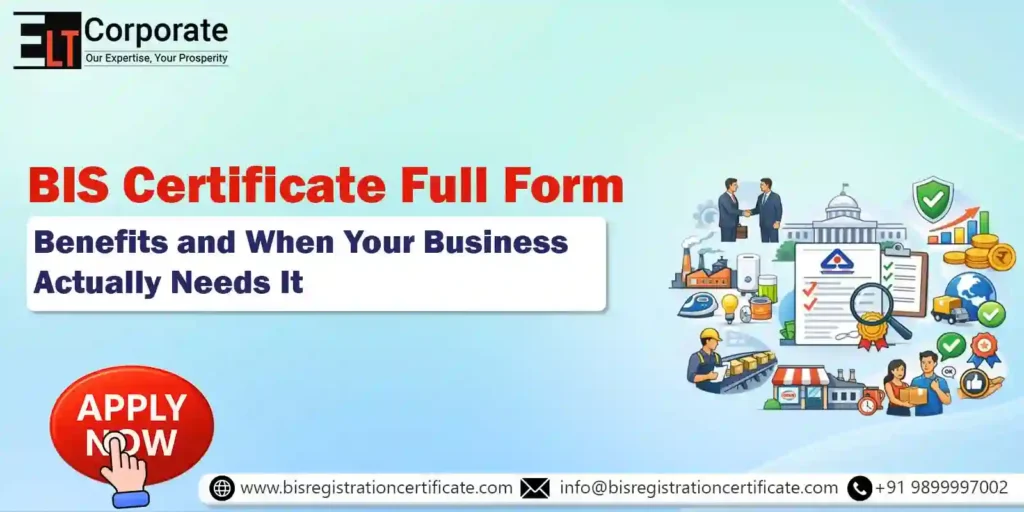
Did you know over 380 products sold in India mandatorily require BIS certification? Understanding its full form and benefits is no longer optional for businesses today. This critical certification ensures product quality and safety, impacting everything from consumer electronics to steel and cement. The BIS Certificate full form is the Bureau of Indian Standards Certificate. This vital document confirms that a product meets specific Indian Standards, ensuring reliability and consumer safety.
For manufacturers and importers, especially those operating in major industrial cities like Delhi, Mumbai, Pune, Bengaluru, and Chennai, understanding BIS is key to legal compliance and market success. This guide will explore the benefits and when this certification becomes an absolute necessity for your business.
What is the Full Form of a BIS Certificate? Demystifying the Bureau of Indian Standards
The Bureau of Indian Standards (BIS) serves as India’s national standard body. Established under the BIS Act 2016, its core mandate is to promote standardized manufacturing, marking, and quality certification of goods. This initiative aims to protect consumers by ensuring product reliability and reducing health and safety hazards. Understanding the ISI Mark is also crucial.
The ISI Mark is a standard mark granted by BIS to products that conform to Indian Standards. It typically includes the ISI logo, an IS number (referring to the Indian Standard), and a CM/L number (for the manufacturing license). This mark acts as a symbol of quality and a trust signal for consumers across India
Read More: Introduction To Bureau Of Indian Standards
Key Benefits of BIS Certificate for Your Business: Beyond Just Compliance
Obtaining a BIS Certificate offers significant advantages that extend far beyond simply meeting regulatory requirements. It is a strategic move that can drive business growth and enhance market standing.
Ensuring Mandatory Compliance & Avoiding Penalties
BIS certification ensures your products comply with Indian laws. Selling non-certified goods can lead to severe penalties, including heavy fines (up to INR 5 lakhs), product seizures, and even imprisonment. Businesses in major manufacturing hubs face increased enforcement, making compliance critical.
Boosting Consumer Trust & Enhancing Brand Reputation
The ISI Mark is widely recognized as a symbol of quality and safety in India. Products bearing this mark instill confidence in consumers, directly impacting sales and fostering long term brand loyalty. This trust factor is invaluable in competitive markets.
Gaining Market Access & Competitive Advantage
Many product categories require BIS certification to be legally sold in the Indian market. Achieving this certification grants you access to these markets. It also differentiates your products from uncertified alternatives, giving you a significant competitive edge.
Facilitating Exports & Meeting Global Standards
While primarily for the Indian market, BIS certification often aligns with international quality benchmarks. This can streamline processes for businesses looking to export their products, demonstrating a commitment to high standards globally.
Streamlining Procurement for Government & PSU Orders
Government departments and Public Sector Undertakings (PSUs) often prioritize or mandate BIS-certified products in their tenders. Holding the certificate can open doors to large-scale procurement opportunities and expand your client base.
Required Documents for BIS Certification
Below we mentioned required documents for BIS certification
- Application form (duly filled)
- Factory registration documents
- Manufacturing process flow chart
- List of manufacturing machinery
- Testing equipment calibration certificates
- Raw material test reports
- Product drawings/specifications
- Trademark registration (if applicable)
- Authorisation letter (if applied by a representative)
- Test reports from a BIS-recognised lab
- Address proof of factory * Layout plan of the factory
Validity of BIS Certificate
A BIS license is typically granted for a period of **one to two years**. It can be renewed, provided that the product continues to conform to the relevant Indian Standard. Regular surveillance by BIS, including factory inspections and market sample testing, ensures ongoing compliance.
Process/Step-by-Step Procedure for BIS Certification
The BIS certification process involves several key stages, from initial application to ongoing surveillance:
- Application Submission: File an online application along with all necessary documents. 2. Factory Inspection: BIS officials conduct a thorough inspection of your manufacturing facility.
- Product Testing: Samples of your product are sent to a BIS recognized laboratory for rigorous testing against relevant standards.
- Grant of License: If the factory inspection and product testing are satisfactory, BIS grants the certification license.
- Post-Certification Surveillance: BIS conducts periodic checks to ensure continued adherence to standards.
Common Mistakes to Avoid During BIS Certification
Navigating the BIS certification process can be complex. Avoid these common pitfalls to ensure a smooth journey:
- Incomplete Documentation: Ensure all required documents are accurate and complete.
- Lack of Internal Testing Facilities: Have proper in-house testing equipment and personnel ready for inspection.
- Ignoring Product Standard Updates: Stay informed about changes in product standards and regulations.
- Delaying Factory Setup Changes: Address any required factory modifications promptly before inspection.
- Choosing an Unreliable Consultant: Partner with experienced professionals for guidance.
What Happens If You Ignore BIS Certification?
Ignoring mandatory BIS certification carries significant risks and consequences for your business:
- Legal Penalties: Fines, product seizures, and potential legal action under the BIS Act 2016.
- Market Access Restrictions: Inability to legally sell your products in India, leading to lost revenue.
- Reputational Damage: Loss of consumer trust and a tarnished brand image. * Competitive Disadvantage: Certified competitors will have an edge, capturing your market share.
- Product Recalls: Potential for costly product recalls if non compliant goods are already in the market.
The Cost Involved
The cost of BIS certification varies based on the product category, testing requirements, and scheme. Here’s a rough breakdown:
| Cost Component | Rough Range (INR) |
| Application Fees | 500 – 10,000 |
| Factory Audit Fees | 5,000 – 20,000 |
| Product Testing Charges | 10,000 – 1,00,000+ (highly variable) |
| Annual License Fees | 1,000 – 10,000 |
| Consultancy Fees (if applicable) | Varies widely |
Note: These are rough estimates and can vary significantly based on product type, testing complexity, and other factors.
How ELT Corporate Pvt. Ltd. Can Help You
Navigating the complexities of BIS certification can be daunting. This is where ELT Corporate Pvt. Ltd. steps in to provide expert assistance. We offer comprehensive support through every stage of the process, from initial document preparation and application submission to liaising with BIS officials and accredited testing labs.
Our team understands the nuances of various BIS schemes, including ISI, CRS, and FMCS, ensuring your application is accurate and efficient. With ELT Corporate Pvt. Ltd., you gain a reliable partner committed to securing your BIS certification smoothly and promptly, allowing you to focus on your core business.
Conclusion: Secure Your Business Future with BIS Certification
The BIS certificate full form and benefits are clear: it’s not just a compliance hurdle but a gateway to market access, enhanced consumer trust, and a stronger competitive position. Whether you’re a manufacturer in Delhi-NCR, an importer in Mumbai, or an innovator in Bengaluru, securing this certification is vital for your long-term success. Don’t delay your market entry or risk severe penalties. Take the proactive step to ensure your products meet India’s stringent quality standards. Get expert assistance for your BIS certification needs today!
FAQs
Q1: Is BIS certification mandatory for all electronic products in India?
No, it’s mandatory for over 380 products under various schemes, including many electronic and IT goods notified by MeitY. Skipping it can lead to heavy fines and product seizures, affecting your business significantly.
Q2: As an importer, how long does BIS FMCS certification typically take?
The Foreign Manufacturers Certification Scheme (FMCS) process can take several weeks to months, depending on product complexity and documentation. Efficient preparation and expert guidance can help avoid costly delays at ports like Mumbai.
Q3: What are the tangible benefits of an ISI Mark for new brands?
The ISI Mark significantly boosts consumer trust, especially for new brands, by assuring product quality and safety. This builds confidence, helps differentiate in competitive markets, and can lead to increased sales and loyalty.
Q4: Are there government subsidies to help small manufacturers with BIS certification costs?
While direct subsidies specifically for BIS certification are not widely available, some government schemes for MSMEs may offer broader support for quality improvement or
technology adoption, which could indirectly assist with costs. Research local schemes in your state.
Q5: Where can I find reliable BIS-approved testing labs in major cities?
BIS maintains a list of recognized labs on its official website, often found in major industrial cities like Delhi-NCR, Bengaluru, and Chennai. Choosing an accredited lab is crucial to avoid testing pitfalls and ensure accurate results.